Wednesday, May 11, 2011

Solo Hike 2


What I see:
  • Nature in a relatively pure form, aside from the cars and streets, this is undisturbed
  • still lots of birds
  • the light shining through the trees lets me see the small insects flying in bunches
  • the shadowed basketball court, this time with no one on it
  • the big glare off of the house across from me
What I hear:
  • Lots of cars today, many more than last time
  • Wind and leaves
  • More insects, but mainly bees and crickets
  • Car doors closing
  • Distant music
What I smell:

  • The dampness of the dew still there from the morning
  • Lots of flowers that are just starting to bloom
  • Freshly cut grass
  • The eucalyptus tree that looms directly above me

About Me!


I’m a bay area guy. My family has been here for years; my great-grandparents moved here in 1942 and both my parents were raised close by. I have lived at my moms house in Richmond for my entire life, and have moved countless places around the Bay Area with my Dad and Stepmother. I have not really had an impact ecologically, but I am beginning to get more out into nature, and help my mom in the garden. I wrote a book about To Kill A Mockingbird a few years ago as a project that received an A. My favorite animal is the Panda Bear, an animal that I have liked since preschool and an animal my grandmother adored. I really hope that Richmond cleans up. Even though this will be a very gradual change, I think that the process of removing most of the bad areas and connecting the communities will be great for my city. I don’t spend a whole lot of time in my town. I go to school in Marin and I basically come home and stay in the house. Most of the other activities that I am a part of take place in cities surrounding Richmond because there is not a whole lot to do in my city. I recommend that people do not come into Richmond scared. Many people are under the impression that the entire city is bad neighborhoods but it is not so. Most of Richmond is not like this and people would find this out if they actually came to Richmond. Just be friendly, and all will be well!
Here is a picture of me in my natural element, on the baseball field.


Tuesday, May 10, 2011

Berry Challenge!

Taking a plant under my wing was an interesting task to handle. There has only been one other time where I had to take care of a plant on my own (a vegetable garden) and I did not pay that much attention to it. My strawberry though, was a different story. I placed it in a, area on the side of my house that receives sunlight for most of the day. At the beginning, it was very easy to take care of because of the frequent rains of the spring, but it has gotten increasingly difficult as of late. With the work load kicking up,and me not getting home until 7 o'clock, I had trouble remembering to water the plant. However, once the first bud popped up, I was determined to grow the plant into a fully developed plant that would match my grandmother's plant which yields about 10 berries per year.

Observations:
  • The plant is growing very fast
  • It looks like something's eating it...
  • There are new leaves almost every day
  • New buds are popping up almost daily
  • It looks like the plant is dying. Leaves are turning red, and a bud looks dead too
  • Why are leaves dying
  • More leaves dying, this doesn't make sense!
  • I'm watering well, not too often, not too far between
  • My first strawberry is finally here, how long will it take?
  • Berry from green -> white
  • The berry is getting red from the bottom up
  • Almost all the way ripe!
  • The berries are pretty good, do they taste better when the plant is older?

Community Information

Come one, come all! Richmond is the new place to be for all of the hummingbirds in the bay area. With plants that you love like salvia, fuchsia, petunias, and jasmine you are guaranteed to have a great time. All of these plants flourish in the climate of Richmond, so you don't ALL have to go to that one house anymore! There is also lots of shelter, including your favorite trees to nest in. If you come to Richmond, there will be lots of chances to put on a show for the humans who grow plants strictly to see you fly up, and drink their nectar. The climate is perfect too, so you don't have to worry about huddling up with your mate(s) in the winter. Your babies will be safe here too, there are virtually no predators that you have to worry about avoiding like you have to do in Marin. You will feel very safe letting your kids go off into the wild to get the hang of flying. Richmond is the perfect city for you and your family! For more information, visit www.nikkosberryberry.com we hope to see you soon!

Solo Hike 1

Solo Hike 1: This spot is very peaceful. I still see lots of cars, but the sound of the every day traffic is distant.
What I see:
  • Lots of plants, grass, trees.
  • There are lots of birds too. Swallows, jays, crows, and some I don't know the names of
  • The basketball court is full of people, as it usually is on a friday night.
  • Only the occasional car drives by.
What I hear:
  • Birds chirping
  • insects buzzing, but I don't know where it's coming from
  • Tires on the concrete
  • Basketball shoes squeaking on the blacktop
  • the rustle of the leaves of trees
What I feel:
  • Like this is how I should
  • This park is very quiet, I should have taken the time to sit here before
  • Places like this should be more popular instead of playing video games.

Food Web, Native vs. Non-Native, Ecology

The food web in Richmond is very small. Due to the lack of wildlife, there is not very many, if any predators in the area. The largest predators are domestic cats, there are no snakes, deer, foxes, wolves, or any other predators that roam free in large, open areas like Novato. The most dominant decomposers in Richmond are worms. They have a very strong presence in my garden, and in the gardens near our house. The insects that dominate are aphids, which are then eaten by the ladybugs. There are also dragonflies, beetles, bees, wasps, and the occasional preying mantis in the garden as well. The birds feed on all of the different types of insect, and sometimes a cat will kill and eat a bird. The biodiversity in Richmond mostly comes from plants, not from animals. There are many, many different types of plants in the area that are native, and non-native as well. Compared to the amount of biodiversity that the california floristic province had, Richmond is a very disappointing city. There are not lots of different trees, or animals like the CFP has. Humans have had a profound effect on the biodiversity in Richmond. The removal of all of the wild plants during the industrialization made many species rapidly disappear from the city, leaving only the animals that were fit to survive still in the area. We have also had a large effect on the CFP. The way that we have treated such fertile land has lead to it being really tough to restore it to its natural state.
Native plants are very helpful to an ecosystem. Plants native to any area support the wildlife that is native, giving the animals food and shelter in a plant that they are familiar with. When an area has lots of native plants, the area usually thrives because of the natural balance that the plants and animals have with each other. Plants and animals that are both native to a certain area easily coexist, so the area thrives. On the contrary, non-native plants are often invasive. This means that the plan spreads extremely quickly, and often kills off native plants and animals by taking the sun, and root space from the plants, leading to the death of the native plant. This eventually will kill the native animals because they do not have shelter, and cannot quickly adapt to a new environment. The only naturally occurring body of water near my house is the Pacific ocean. But one body of water has a large effect on my town, and the surrounding areas. I live about 10 minutes away from the San Pablo Reservoir. This reservoir supplies water for Richmond, and most of the rest of the east bay as well. The reservoir's levels had been very low for the last four, or five years, but with the heavy rains of late 2010, and early 2011, the reservoir overflowed for the first time since 2006.

Vegetation

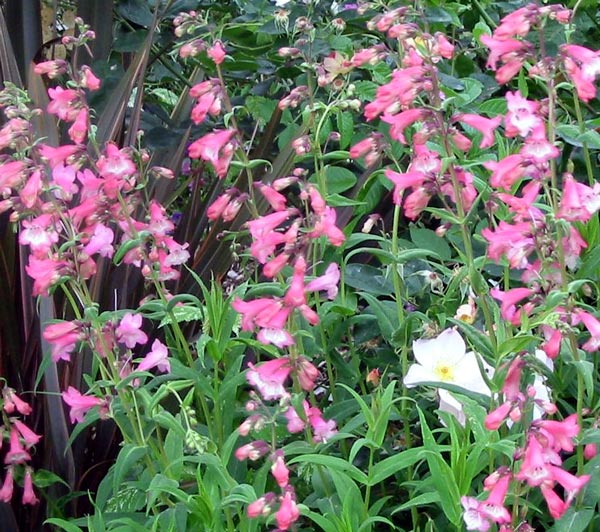
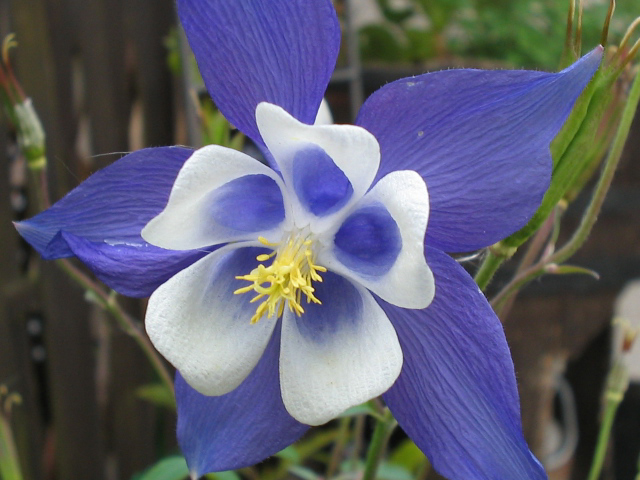
There is not very much vegetation in my town. The houses are relatively close together making wild plants scarce. Some native plants include, iris, lilies, penstemon, poppies, erigeron, salvia, aquilegia, heucheria, and digitalis. These flowers are not common in the wild, but due to the fact that they are native, they are very popular in gardens in the area. My mom's garden is home to most of these plants as well. Before the heavy development that took place in Richmond, the city was a grassland. The city of Richmond is very flat, and without houses the city would be a very large grassland with native flowers, and trees growing abundantly. Some of these native trees are the madrone, pacific dogwood (these cause major allergies), tanbark oak, california laurel, incense cedar, and the catalina redwood. The soil at my house is very good. The way that it has been treated over the years has greatly improved the soil from a dry and hard soil to a soil that is very light and airy. Our backyard soil is very dark and rich because we have used lots of grape seed and shell compost that greatly enriches the soil. The soil is always moist, and there always lots of worms in it.

Tuesday, May 3, 2011

Cycles of the Elements

This carbon map demonstrates how the carbon in the atmosphere goes naturally through our environment, and how we greatly contribute to the amount of carbon by burning fossil fuels. This is very relevant in my area because of the refinery just a few minutes away.

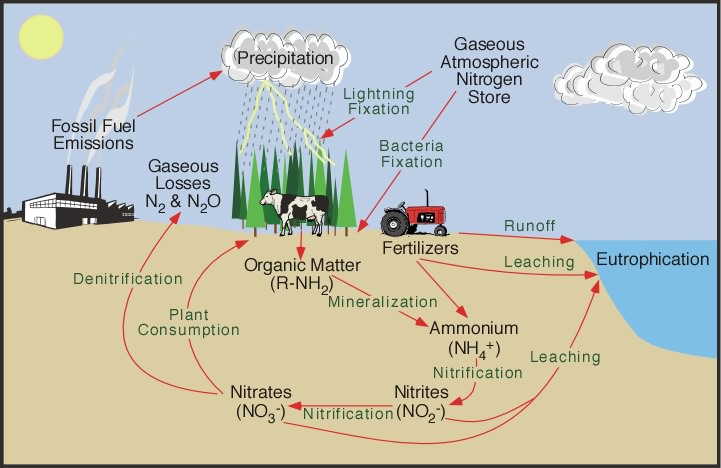
This map illustrates how much we contribute to the nitrogen cycle. We put high amounts of nitrogen through burning fossil fuels, and using fertilizers as well. Animals greatly contribute as well, and when there are large farms with livestock, the soil and water nearby are greatly affected as well. Nitrogen is one of the elements that causes eutrophication, the process of large amounts of algae growing in a water source, and killing the organisms in that water.

Phosphorus is also a large player in our society. Phosphorus is one of the main ingredients in most fertilizers, and these chemicals run off of farms, promoting further eutrophication in the water sources surrounding the farms Phosphorus also comes naturally from rocks containing phosphates. The waste that animals produce also contribute to the amount of Phosphorus because their waste is dissolved into the soil. Here's how it all works.

Sulfur is also a problem in our soil. This is another element that is released in high content levels due to the burning of fossil fuels. The sulfur gets into the rain, and puts high contents into the ground. This only adds to the amount of sulfur in the soil because the element is yet another that is heavily used in chemical fertilizers. This map shows the cycle of sulfur in our environment.

My town greatly adds to the levels of all of these elements. All of these are released in high volume when burning fossil fuels, an the traffic in Richmond is ever-increasing. People continue to move to Richmond, a town that is not in the middle of the big cities, but is close enough to be easily access the big cities. The law of conservation of matter is very important because it states that matter cannot be created or destroyed. This is very important because we continue to put lots of these elements in our environment, especially in the ground. This will continue to be a problem because a few years down the road there will be highly problematic amounts of these elements present, and we will have no way to offset them.

Interview with Mom

Q: How has the landscape changed?

A: They have planted a lot more trees, low-maintenance native plants planted when remodeling the civic center. Tree planting program. The city is also making improvement to the streetscape. Many more lights, trees, newer signage.

Q: What animals/plants have come & gone?

A: The home garden has developed a lot since I have worked on it. Bumblebees did not used to be here but now they are. Dragonflies, hummingbirds, ladybugs, worms, birds bug and small, grasshoppers.

Q: What developments have had big impacts?

A: The remodeling of the civic center brought new street lights, ADA approved curbs on sidewalks. The walkway from the marina to Berkeley has also been remodeled.

Q: How has traffic and population changed?

A: There is significantly more traffic now. It used to take no time to get off of our street to Barrett (the main street) but now it takes lots of time and waiting. More lights, gentrification, young population is up as well. Our street used to be all old people. There used to be bars on all of the windows, but those have gradually come down.

Q: What policies have been put into place to regulate growth?

A: When a person sells their house, the have to plant trees in front of the house if they do not have any already.

Q: What is your favorite thing about your town? Why?

A: The weather. We have a small micro climate where the weather does not get extreme. I also like how we are close to everything, but not right in the middle of the big cities. Without traffic we are 20 minutes from San Francisco, Marin, Vallejo and other big cities. I like the diversity in our town, even our street is very diverse.

Sunday, May 1, 2011

Air Quality

The air quality in Richmond is middle of the road. Areas near the always-active refinery have high numbers of children with asthma, due to the emissions released into the atmosphere. Some of these emissions include Carbon Dioxide, and Hydrocarbon emissions. The Chevron refinery vows to have "reduced hydrocarbon emissions by 95 percent from our ship loading operations" (1) However, Chevron only addresses the hydrocarbons that are released into the atmosphere, and fail to mention the rest of the greenhouse gases that are commonly emitted from refineries. The air in the rest of the the city though, is good. The only pollutants that show up in the atmosphere are those common to the rest of the bay area, PM2.5 (Particulate Matter), and Ozone. The fossil fuels that are emitted by the refinery positively effect the cycles of the elements. The refinery is also right on the water to the emissions are going into the air, and most likely directly into the pacific ocean, which is not good for Richmond, or any other cities that surround the bay the pollution is being dumped into


(2)


1: http://www.chevron.com/products/sitelets/richmond/safety/protecting_air.aspx
2: http://www.wunderground.com/US/CA/Richmond.html

The Seasons

Similar to the rest of California, Richmond has a mild mediterranean climate. This means that the weather does not vary too much throughout the year. The winters are cold, and the summers hot, but there are not normally extreme temperatures in any seasons.
Winter:
  • Colder than the other seasons (no surprise)
  • Depending on the year, there may or may not be lots of rain. (winter 2010 had a rain for about 15 days straight)
  • Still very unpredictable, scattered sunny days, some overcast, some cold
Spring:
  • Lots of rain throughout the spring months (especially April)
  • It tends to be more windy in the spring months
  • Plants begin to pollenate, causing lots of allergies
  • Weather is still unpredictable
  • Begins to dry out in late May, more sunny days and the temperature begins to rise
Summer:
  • Very little rain due to the Pacific High deflecting the storms and sending them northward to Oregon and Washington
  • Never gets too hot, due to the proximity of the Pacific Ocean
  • Much more predictable weather, usually about 70 degrees
Fall:
  • Wind REALLY picks up
  • Fall months are very similar to summer, little rain
  • Temperatures begin to drop a lot, especially at night
Rainfall:
  • Richmond averages about 25.4 inches of rain/year
  • San Francisco averages about 22.3 inches of rain/year
  • San Rafael averages about 34.3 inches of rain/year
  • Vallejo averages about 19.6 inches of rain/year
Source for rainfall info:
http://www.idcide.com/weather/ca/richmond.htm